Leave Your Message
-
Phone
-
E-mail
-
Whatsapp



Sourcing The Club Wheel Lock wholesale requires more than comparing unit prices. Buyers must connect product quality with vehicle compatibility, retailer expectations, and after-sales reliability. S&P Global Mobility’s 2024 vehicle-age analysis reported that the average U.S. light vehicle reached about 12.6 years. Older vehicles often need practical, affordable security accessories. That creates steady aftermarket potential. However, vehicle age alone does not prove demand. Regional vehicle mix and parking habits also influence purchasing decisions.
The Auto Care Association’s 2024 Joint Economic Impact Study highlights the scale and resilience of the automotive aftermarket. This context supports careful wholesale planning, especially for distributors serving independent repair shops and accessory retailers. This guide presents seven sourcing tips based on practical supplier evaluation. It covers fitment data, hardened-steel construction, lock-cylinder quality, surface protection, packaging, minimum order quantities, and warranty terms. Ask suppliers for product samples and measurable specifications. A clear fitment chart is essential. One incorrect application can create returns, complaints, and wasted inventory.
Reliable sourcing is rarely perfect. A supplier may offer an attractive price but provide inconsistent key matching between batches. Another may promise fast delivery without showing production capacity. Those details deserve direct questions, not assumptions. Certifications can help, but they should be verified against the actual factory and product model. That step is sometimes overlooked. It should not be. The following recommendations encourage evidence-based comparisons, realistic cost calculations, and regular quality checks. The goal is not simply to find the cheapest The Club Wheel Lock. It is to build a dependable wholesale program that retailers can trust, even when market conditions change.
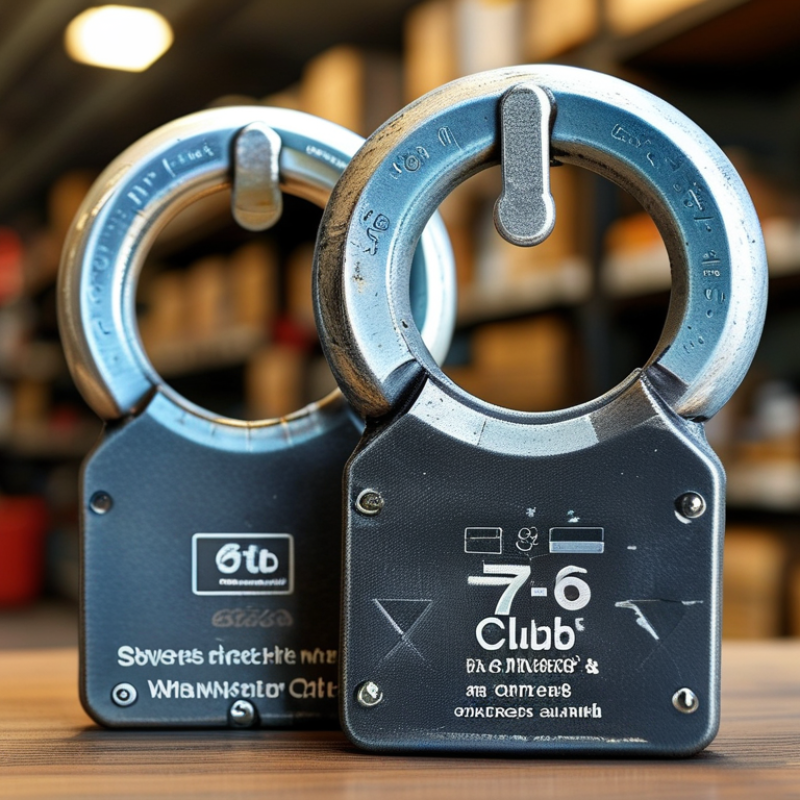
Defining wholesale requirements is the practical starting point for sourcing club wheel locks. The NICB’s 2023 Hot Wheels report recorded 1,020,729 vehicle thefts in the United States. That figure does not prove every driver needs the same lock, but it supports careful demand planning.
Specify the vehicle types, wheel sizes, and customer markets before contacting factories. Record shaft diameter, lock length, clearance, and required steel grade. Ask for corrosion testing, torque testing, and resistance testing against common hand tools. Do not accept vague phrases such as “heavy duty.” Request test methods and dated reports.
Plan quantities by sales channel. A retailer may need mixed fitments, while a distributor may prefer full cartons of one specification. Set a realistic minimum order quantity, sample quantity, lead time, spare-key ratio, packaging size, and defect allowance. Include barcode requirements and an inspection standard before production. Short sentences help here. Details prevent expensive misunderstandings.
The U.S. Department of Transportation’s National Highway Traffic Safety Administration emphasizes layered vehicle security, so the lock should be presented as a visible deterrent, not a complete theft solution. I would also verify installation clearance on several wheel designs. One assumption can fail. In practice, a sample may fit a steel wheel but interfere with an alloy wheel cover. That lesson is easy to overlook. Require pre-shipment inspection, clear warranty terms, and a traceable batch code for every wholesale order.
| No. | Wholesale Requirement | Recommended Specification | Practical Sourcing Data | Buyer Verification Checklist |
|---|---|---|---|---|
| 1 | Lock Type and Vehicle Coverage | Adjustable steering-wheel lock with a hardened locking bar and a visible external design. | Common adjustable designs cover steering-wheel rims approximately 28–38 cm in diameter, depending on the product design. | Confirm the minimum and maximum usable wheel diameter, rim thickness range, adjustment method, and compatibility with vehicles using steering-wheel controls or airbags. |
| 2 | Material and Construction | Hardened steel or steel alloy core, corrosion-resistant surface treatment, and protective polymer or rubber contact areas. | Steel is commonly used for the load-bearing locking bar; zinc-plated, powder-coated, or similar finishes help reduce surface corrosion. | Request material declarations, coating details, weld or joint photographs, surface-finish samples, and test evidence for bending and cutting resistance. |
| 3 | Locking Mechanism | Key-operated cylinder or combination mechanism with a positive locking position and controlled key removal. | For key-operated products, a set of two keys per unit is a common retail-pack requirement; key quantities should be specified in the purchase order. | Check smooth operation, key duplication policy, resistance to forced rotation, jammed-lock handling, and whether the lock remains secured when the key is removed. |
| 4 | Dimensions, Weight, and Storage | Compact folding or telescoping structure with sufficient clearance for practical in-vehicle storage. | Many full-size steering-wheel locks weigh roughly 0.8–1.5 kg per unit; final weight varies with bar length, steel thickness, and accessories. | Obtain packed and unpacked dimensions, net and gross weight, carton quantity, carton measurements, and drop-test requirements before quotation. |
| 5 | MOQ and Order Economics | Separate pricing for stock orders, standard wholesale orders, and customized production. | A practical quotation request should compare 100, 500, and 1,000 units because unit pricing, packaging, and tooling costs may change by volume. | Ask for MOQ per model and color, price breaks, tooling charges, sample fees, payment terms, and the validity period of the quotation. |
| 6 | Packaging and Private Label Options | Retail box or recyclable carton, protective inner packaging, instruction sheet, barcode area, and neutral master cartons. | Packaging specifications should include units per master carton, carton dimensions, gross weight, country-of-origin marking, and barcode format. | Approve artwork proofs, packaging materials, warning labels, user instructions, barcode placement, and carton drop-test results before mass production. |
| 7 | Quality, Compliance, and Delivery | Documented inspection process, traceable production batches, export-ready documentation, and an agreed delivery schedule. | A typical production plan should include pre-production approval, in-process inspection, final random inspection, and shipment release after quality acceptance. | Confirm applicable destination-market requirements, test reports, inspection standards, warranty terms, defect allowance, lead time, shipping terms, and spare-key policy. |
Note: Dimensions, weights, MOQs, and lead times are planning references. Confirm final values with the selected supplier using an approved sample and written purchase specifications.