7 Tips for Choosing a Center Lock for Car?
Choosing a Center Lock For Car is not simply a styling decision. It affects wheel retention, brake clearance, service time, and driving confidence. S&P Global Mobility reported that the average age of vehicles in the United States reached 12.6 years in 2024. Older cars often have modified hubs, worn threads, or unclear service histories. That makes exact fitment more important than appearance.
The National Highway Traffic Safety Administration treats wheels, tires, and fastening components as safety-critical parts. SAE J2530 also provides guidance for aftermarket wheel applications, including load and fitment considerations. These references do not approve every center-lock product. They show why measurements and documented testing matter. A shiny alloy can still have the wrong hub bore. A strong-looking nut can still fail under incorrect torque.
Race-engineering author Carroll Smith wrote, “A wheel is a highly stressed structural component.” That warning remains useful for road cars and track vehicles. His point is simple. Fast installation means little without secure installation. Before comparing products, check spline count, thread direction, stud length, nut material, torque requirements, and brake clearance. Confirm whether the system needs locking pins, safety wire, or a special tool.
The seven tips ahead focus on practical selection, not marketing claims. They examine compatibility, materials, torque control, maintenance, and supplier evidence. Some choices look obvious but are not. Even experienced owners can overlook thread engagement by a few millimeters. That small mistake can become expensive, noisy, or dangerous. A better decision begins with the hub, not the catalog photograph.
Understanding Center Lock Types and Their Vehicle Applications
7 Tips for Choosing a Center Lock for Car
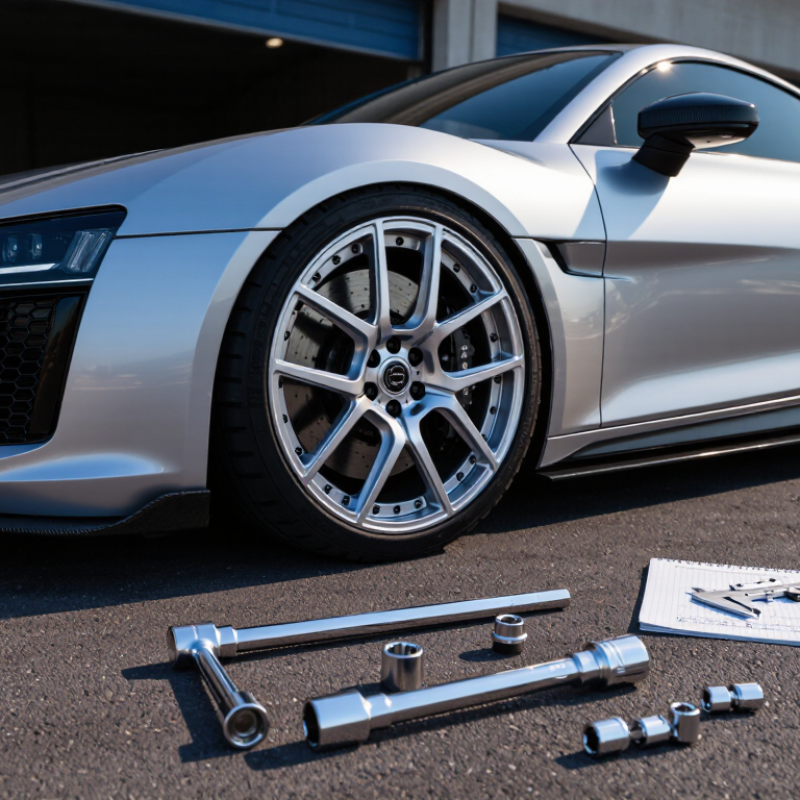
Understanding center lock types is essential before changing a wheel system. A single-nut center lock suits vehicles designed for quick wheel changes and strong hub engagement. A multi-piece locking system may offer different adjustment options, but it needs accurate assembly. Some center locks fit racing vehicles, while others serve selected high-performance or historic applications. They are not universal replacements for five-lug wheels.
Check your vehicle’s original hub design. Confirm the thread direction, nut size, and seating surface. Measure the center bore carefully. Compare brake clearance with the wheel’s inner profile. Select a lock made for your vehicle’s speed, weight, and intended use. Ask a qualified technician to verify compatibility before purchasing. Use the specified tightening method and torque value. A calibrated torque tool matters here.
Inspect the locking nut, splines, and mating surfaces before every installation. Dirt can create a false sense of tightness. Never mix parts from different systems without documented approval. In practical workshop checks, even a small washer difference can change engagement. I have learned that visual fitment can be misleading. It looked correct once. It was not. Listen for unusual movement after a short, controlled drive, then recheck the assembly. Replacement parts should match the original material and dimensions, not merely the appearance.
Checking Wheel, Hub, and Brake System Compatibility
7 Tips for Choosing a Center Lock for Car?
Checking wheel, hub, and brake compatibility should guide every center-lock decision. Tip 1: Measure the wheel’s center-lock bore and locking interface. The wheel must seat evenly against the hub. Tip 2: Confirm the hub spline, thread direction, and nut dimensions. Small differences can create dangerous movement. Tip 3: Check the manufacturer’s torque specification with a calibrated torque wrench. Hand-tightening is not enough.
Tip 4: Inspect brake clearance before buying. Measure the space between the wheel barrel, caliper, and rotor. A larger brake assembly may contact the wheel under cornering. Tip 5: Verify wheel offset and backspacing. Correct center alignment does not guarantee suspension clearance. Turn the steering fully and inspect both sides. Do not guess.
Tip 6: Ask a qualified technician to check the hub, bearings, and retaining hardware. I once focused on the wheel fit and overlooked worn hub threads. That was a useful mistake. Tip 7: Recheck compatibility after installation. Look for uneven seating, rubbing marks, vibration, or unusual heat near the hub. Road testing should begin slowly, preferably in a controlled area. Keep the vehicle’s service manual nearby. Parts may look similar. Their specifications may not be.
7 Tips for Choosing a Center Lock for Your Car
Check the wheel, hub, and brake system before installation. The chart shows a realistic example measurement set in millimeters; always verify the exact specifications for your vehicle and wheel.
Key Compatibility Checks
1. Confirm that the wheel center bore is equal to or larger than the hub pilot diameter.
2. Check that the center-lock adapter or nut matches the hub thread size and pitch.
3. Maintain sufficient thread engagement, typically at least one thread diameter for secure fastening.
4. Verify radial and axial clearance between the wheel and brake caliper.
5. Confirm that the locking nut seats fully against the wheel mounting surface.
6. Inspect wheel runout and mounting-face cleanliness to prevent vibration.
7. Use the vehicle-specific tightening torque and recheck the assembly after initial driving.
Evaluating Security Features, Installation, and Maintenance
A reliable central-locking system should be judged beyond remote convenience. The FBI Crime Data Explorer recorded 1,020,729 motor-vehicle thefts in 2023. That figure makes basic security evaluation worthwhile. Tip 1: Check rolling-code encryption and resistance to replay attacks. Tip 2: Confirm compatibility with the vehicle’s wiring and safety systems. Cheap universal kits may create faults.
Installation quality matters as much as the lock itself. Tip 3: Use a qualified technician who follows the vehicle service manual. Wires should be protected, routed away from pedals, and sealed against moisture. Tip 4: Test every door, the trunk, the emergency release, and the hazard-light signal. A locked door is useless if passengers cannot exit quickly. NHTSA guidance emphasizes maintaining clear, functional exits during emergencies. Small detail. Big consequence.
Maintenance is often ignored. Tip 5: Inspect connectors twice yearly for corrosion, loose terminals, or crushed insulation. Tip 6: Replace weak remote batteries before winter, when cold reduces battery performance. Tip 7: Keep a physical key available and test it occasionally. Do not rely only on the app or remote. I have seen owners discover a dead battery at the worst time. Security ratings can also mislead; independent testing is stronger than packaging claims. Record installation dates, repair notes, and unusual locking behavior. One imperfect habit is better than no inspection.
Comparing Cost, Quality, and Manufacturer Support
Choosing a center lock for a car requires more than comparing the purchase price. The National Highway Traffic Safety Administration estimates that tire-related problems contribute to about 11,000 crashes and 200 deaths annually in the United States. A secure locking system deserves careful attention. Check the hub material, locking thread design, heat resistance, and documented torque procedure. Cheap hardware may create higher costs through premature wear, damaged threads, or difficult servicing.
Tip: Compare total ownership cost.
Ask whether the price includes the lock, hub interface, safety retainer, tools, and replacement parts. Confirm the manufacturer publishes material specifications and test methods. I would also inspect machining quality personally. A smooth thread and clean contact surface matter more than attractive packaging. Still, visual inspection is not enough. Request fatigue, corrosion, and dimensional reports from the supplier.
Tip: Measure support before buying.
Technical support should provide torque guidance, installation drawings, service intervals, and clear warranty terms. The IATF 16949 quality framework emphasizes traceability and defect prevention within automotive production, so ask how batches are identified and inspected. Support response time is also practical evidence of reliability. One weakness in my own evaluation is overvaluing a low initial quote. A cheaper lock becomes a poor choice if replacement delivery takes weeks or the instructions are vague. NHTSA’s tire-safety guidance also reinforces regular inspection, correct inflation, and secure wheel installation as basic risk controls.